AI Agents Explained in 5 Minutes — No Coding Needed
In short: You hear the phrase "AI agent" everywhere these days. But the moment someone asks "so what actually is it?", it gets hard to explain. That's fine. This single article will get you there in 5 minutes — no coding required.

You hear the phrase "AI agent" everywhere these days. But the moment someone asks "so what actually is it?", it gets hard to explain. That's fine. This single article will get you there in 5 minutes — no coding required.
In one line: an AI agent is "a smart intern that you just give a goal to, and it uses tools to get the job done on its own."
What is an AI agent?#
An ordinary AI (a chatbot) is a tool that answers when you ask. Think of a very smart encyclopedia.
An agent, on the other hand, goes one step further. Give it a goal, and it makes its own plan, actually uses tools, and finishes the job from start to end.
Here's an analogy:
- Chatbot = the person who tells you the recipe
- Agent = the person who buys the ingredients, does the cooking, and brings the finished plate to your table
So how is it different from a chatbot?#
The two big differences are exactly these: tools and looping.
- It uses tools — it searches the web, creates files, sends emails, and operates apps. It doesn't just talk; it acts.
- It loops on its own — if one try isn't enough, it looks at the result and tries again. You don't have to direct every step.
In plain terms: ask a chatbot "find me a good restaurant" and you get a list. Ask an agent "book dinner for tomorrow" and it finds the restaurant, opens the booking page, checks availability, and actually makes the reservation.
How an agent works#
It looks complex, but it's really just repeating the same 4 steps that a person would.
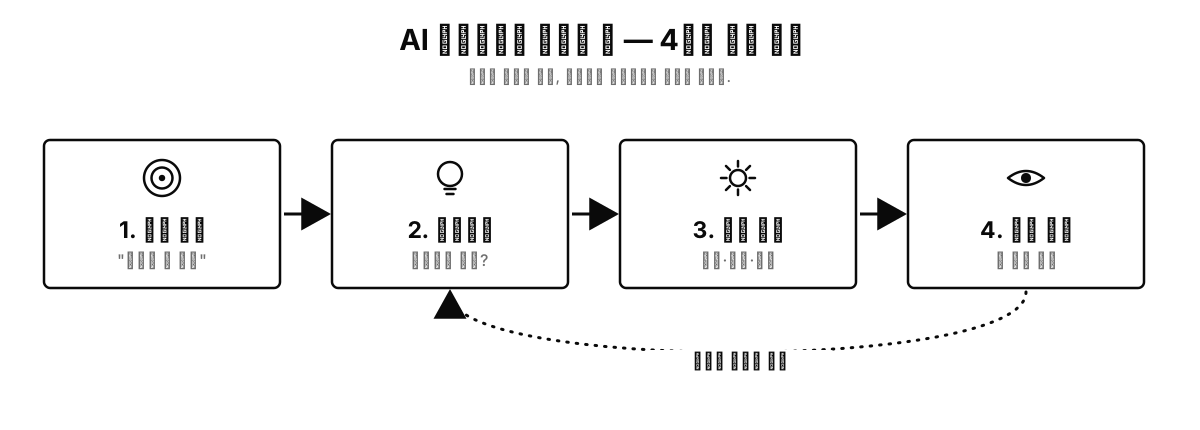
The key is that last step: the loop. If the result isn't good enough, it goes back to step 2 (thinking) and keeps refining until it's satisfied. You give the goal; the agent owns the process.
So what can it actually do?#
It already does things like this in the real world:
- Writing — researches a topic and drafts a full blog post
- Coding — finds bugs, fixes them, and even runs the tests
- Organizing data — gathers scattered data into tables and summaries
- Repetitive work — handles the same daily reports and emails by itself
The easiest way to start#
You don't need any grand setup.
- Pick one small goal. (e.g., "summarize this week's top 3 news stories")
- Tell the AI a 'goal', not the result. Phrase it as "do X for me."
- Look at the result and give feedback. The agent takes it and gets better.
Remember: the secret to using a good agent isn't a perfect command — it's a clear goal plus honest feedback. Just like working with a good colleague.
AI agents are no longer just for experts. Anyone who can state a goal can use one. Start today with one small goal.
Responses
No responses yet. Be the first to respond.